
- North Star Consulting Group
- 10 Oct 2026
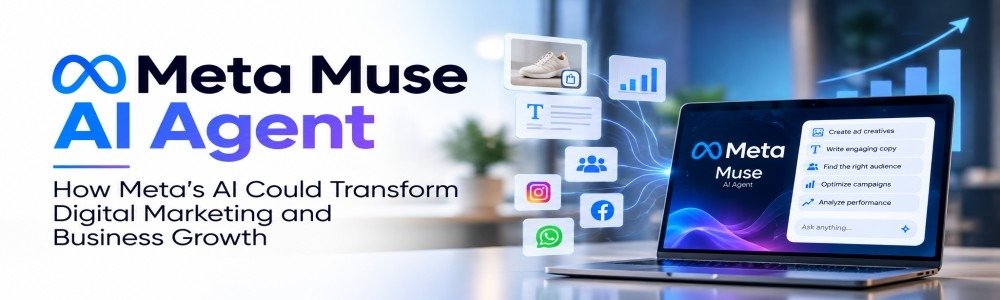
Meta Muse AI Agent: The Future of Digital Marketing
Artificial intelligence is changing how businesses manage marketing, customer communication, and everyday operations. From generating content to analyzing campaign performance, AI tools are helping businesses work more efficiently. One development attracting attention is the Meta Muse AI agent.
Announced by Meta in September 2026, Muse is a personal AI agent designed to do more than answer questions. It can carry out tasks, work with connected applications, and help users make progress towards their goals. Meta has also announced business-focused capabilities designed to support small businesses. These developments could create new opportunities for digital marketing and e-commerce.
What Is the Meta Muse AI Agent?
Meta Muse is an AI agent developed to help users complete tasks across connected applications and online services. Unlike a conventional chatbot that primarily responds to prompts, an AI agent can plan and execute multiple steps towards a defined objective.
Muse is powered by Meta's Muse Spark model and operates through a dedicated virtual environment called Muse Secure VM. Users can interact with it through the Muse app or WhatsApp, subject to availability and supported features.
For businesses, the idea is straightforward: explain a goal, provide the necessary context and permissions, and let the agent help with the work while retaining control over important actions.
Key Features of Meta Muse
1. Multi-Step Task Automation
Muse can work through tasks involving multiple steps rather than simply providing instructions. Depending on the task and available integrations, the process may include researching information, preparing documents, organizing activities, and interacting with online services.
For marketing teams, this type of automation could reduce repetitive administrative work and free up time for strategy and creative planning.
2. Integration With Business Applications
Meta's September 2026 announcement introduced connections with business tools, including Canva, Shopify, Klaviyo, QuickBooks, Slack, and other supported services.
These integrations could help businesses bring information and workflows together. For example, an e-commerce company might use connected sales and marketing information to support campaign planning or organize product-related tasks. Actual capabilities depend on the available connector and permissions.
3. Support for Marketing and Content Workflows
Meta has highlighted business use cases such as reviewing advertising and content performance, identifying areas for improvement, and drafting campaigns.
A marketing team could use an AI agent to help prepare social media calendars, organize campaign ideas, draft content, or summarize performance information. Human review remains essential to ensure that messaging is accurate, appropriate, and consistent with the brand.
4. Goal-Based Assistance
Muse is designed to work towards broader goals rather than only answering individual questions. A business owner could describe a growth objective and ask for an action plan based on available business information.
For example, a small retailer might request an analysis of recent sales and campaigns, followed by a proposed marketing plan. The quality of the result will depend on the data, connected tools, and instructions provided.
5. Permissions and Security Controls
Meta says Muse includes a dedicated virtual environment, security protections, and controls over access and actions. Its business announcement states that nothing publishes, sends, or spends without approval.
Businesses should still review permissions carefully, protect customer information, and verify important outputs before acting on them. Security features are safeguards, not a guarantee that every AI-generated result will be correct.
How Meta Muse Could Benefit Digital Marketing
AI agents could influence several areas of digital marketing:
- Social media marketing: Help develop content ideas, prepare post drafts, and organize publishing workflows.
- Paid advertising: Assist with analyzing campaign information and preparing recommendations for human review.
- E-commerce marketing: Support workflows involving product information, sales data, and marketing platforms where integrations are available.
- Email marketing: Help draft campaign messages and organize marketing tasks using supported tools.
- Reporting and analytics: Summarise performance information and identify questions that deserve further investigation.
These are potential applications, not guaranteed improvements in results. Marketers should continue measuring impressions, clicks, conversions, cost per lead, and return on ad spend to determine whether an AI-assisted workflow delivers real value.
Is Meta Muse Useful for Small Businesses?
Small businesses often have limited time and resources for marketing, administration, and customer engagement. Meta's business-focused Muse announcement aims to help owners coordinate these activities through connected applications and AI assistance.
For example, a retailer could use AI assistance to organize campaign ideas, review performance information, and prepare content drafts. An agency could explore similar workflows for research, reporting, and planning.
However, AI should complement professional expertise rather than replace it. Businesses still need a clear strategy, accurate information, customer understanding, and careful campaign management.
How Digital Marketing Agencies Can Prepare
Digital marketing agencies can prepare for AI agents by building strong foundations:
- Maintain reliable website, analytics, and advertising data.
- Develop clear brand guidelines and content approval processes.
- Learn how supported AI integrations work and what permissions they require.
- Use AI for repetitive tasks while keeping strategy and final decisions under human control.
- Measure the impact of AI-assisted work on productivity and marketing performance.
At North Star Consulting Group, businesses can explore digital marketing and e-commerce strategies that align technology with their growth objectives. Read more on the NSCG blog for insights into digital marketing and e-commerce optimization.
Conclusion
The Meta Muse AI agent represents a shift towards AI systems that can help execute tasks, not just generate answers. Its business integrations and goal-oriented workflows may offer new opportunities for content planning, campaign analysis, and e-commerce operations.
Nevertheless, successful digital marketing still depends on sound strategy, reliable data, customer understanding, and measurable outcomes. Businesses that combine these fundamentals with carefully supervised AI tools will be better positioned to evaluate where automation creates genuine value.
Frequently Asked Questions
1. What is the Meta Muse AI agent?
Meta Muse is a personal AI agent designed to complete tasks, work with connected applications, and help users make progress towards their goals.
2. How can Meta Muse help digital marketers?
It may assist with campaign analysis, content drafting, marketing planning, and repetitive workflows through supported integrations. Results should be reviewed before implementation.
3. Can small businesses use Meta Muse?
Meta announced business-focused capabilities in September 2026. Availability, integrations, and features may vary, so businesses should check Meta's official information for current access.
4. Is Meta Muse a replacement for digital marketing agencies?
No. It can support selected workflows, but businesses still need strategic planning, creative judgement, audience research, technical expertise, and performance evaluation.
5. Is Meta Muse safe for business data?
Meta describes security protections and user-controlled permissions. Businesses should independently assess privacy requirements, review connected applications, and avoid granting unnecessary access.
6. Will Meta Muse improve advertising performance?
Not automatically. It may help analyze data and prepare recommendations, but actual performance depends on targeting, creative quality, budget, conversion tracking, and campaign execution.