
- North Star Consulting Group
- 02 Oct 2026
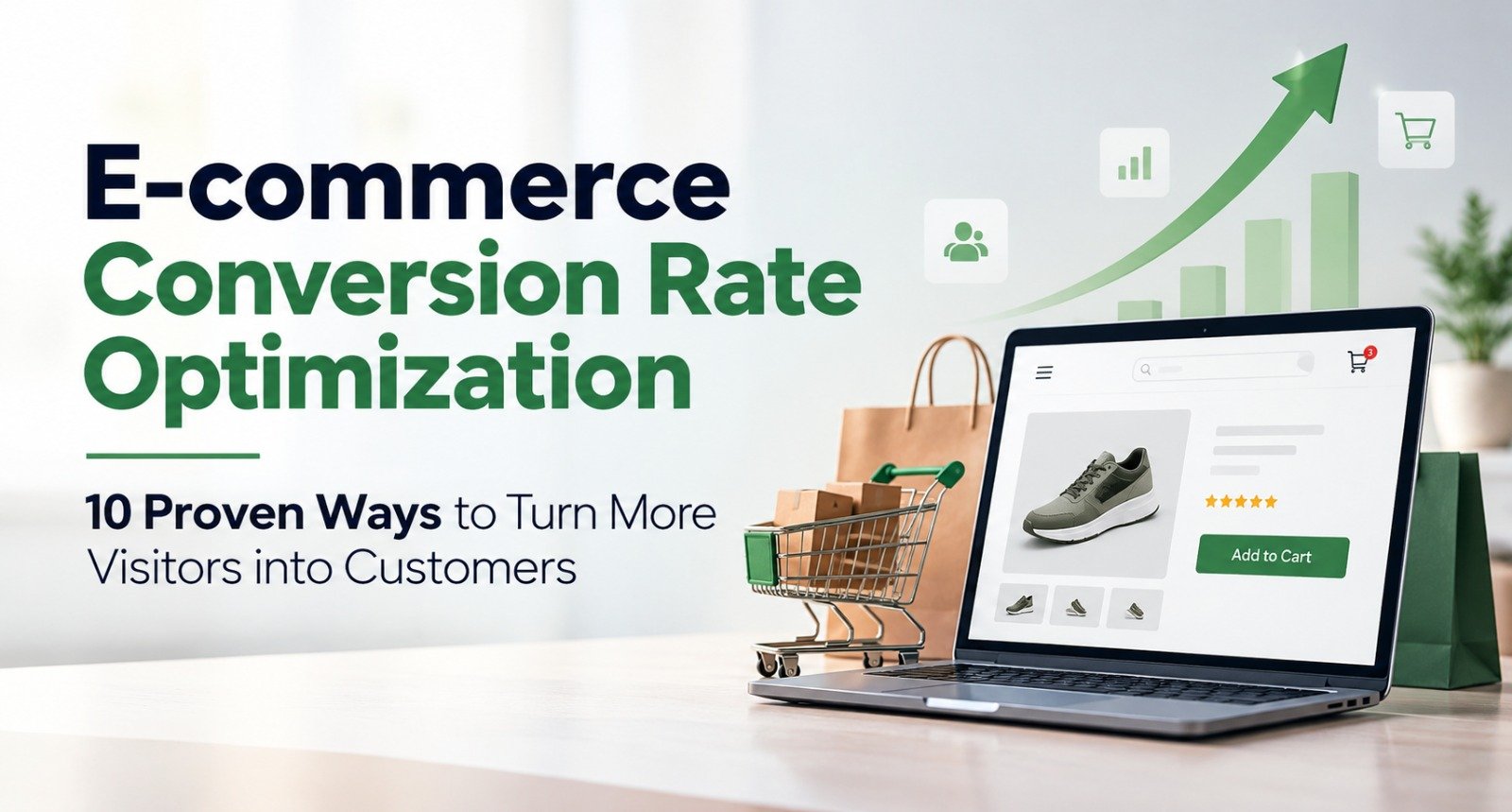
E-commerce Conversion Rate Optimisation: 10 Proven Tips
Getting visitors to an e-commerce website is only the first step. The real challenge is turning those visitors into customers. A website may receive thousands of visitors every month, but if only a small percentage make a purchase, the business is missing valuable opportunities.
This is where e-commerce conversion rate optimisation (CRO) becomes important. By improving the shopping experience, product pages, checkout process, and overall website performance, businesses can increase conversions without relying only on attracting more traffic.
What Is E-commerce Conversion Rate Optimisation?
E-commerce conversion rate optimisation is the process of improving an online store to encourage more visitors to complete a desired action, such as making a purchase, submitting an enquiry, or adding a product to the cart.
The basic conversion rate formula is:
Conversion Rate = (Number of Conversions ÷ Number of Visitors) × 100
For example, if an e-commerce website receives 10,000 visitors and generates 200 purchases, its conversion rate is 2%.
CRO focuses on identifying why visitors leave without purchasing and making improvements that reduce those barriers.
Why Is Conversion Rate Optimisation Important?
Increasing website traffic can be expensive, especially when businesses depend on paid advertising. CRO allows businesses to get more value from the traffic they already have.
For example, improving an online store's conversion rate from 2% to 3% means that the same amount of traffic can generate more customers. This can improve the efficiency of marketing campaigns and contribute to better overall e-commerce growth.
10 Ways to Improve Your E-commerce Conversion Rate
1. Improve Website Speed
Slow websites can create a poor shopping experience. Visitors may leave before viewing products or completing checkout.
Businesses should optimise images, reduce unnecessary scripts, use reliable hosting, and regularly check website performance on both desktop and mobile devices.
2. Create Better Product Pages
Product pages play an important role in purchasing decisions. Use clear product images, informative descriptions, pricing, specifications, availability information, and prominent calls-to-action.
Answering common customer questions directly on the product page can also reduce uncertainty.
3. Optimise the Mobile Shopping Experience
A large portion of online shopping activity happens through smartphones. Your website should be easy to navigate on smaller screens, with readable text, simple menus, accessible buttons, and a smooth checkout process.
Mobile optimisation should be considered an essential part of ecommerce website optimisation, rather than an optional improvement.
4. Make Navigation Simple
Customers should be able to find products quickly. Use clear categories, useful filters, search functionality, and logical menus.
If visitors struggle to find what they are looking for, they may leave the website and purchase from another online store.
5. Use Clear Calls-to-Action
Calls-to-action such as “Add to Cart,” “Buy Now,” “Get Started,” or “Request a Quote” should be easy to identify.
Avoid overcrowding pages with too many competing actions. The CTA should clearly communicate what the customer can do next.
6. Build Trust With Reviews and Social Proof
Customers often want reassurance before purchasing from an online business.
Product reviews, ratings, customer testimonials, secure payment information, return policies, and transparent delivery details can help reduce hesitation.
Social proof is particularly useful for new customers who are unfamiliar with the brand.
7. Simplify the Checkout Process
A complicated checkout can lead to abandoned carts. Keep the process as simple as possible and avoid asking for unnecessary information.
Clearly display shipping costs, taxes, delivery information, payment options, and the final order amount before customers complete their purchase.
8. Provide Convenient Payment Options
Customers have different payment preferences. Depending on the target market, businesses can provide options such as cards, UPI, net banking, wallets, and cash on delivery where appropriate.
A convenient payment experience can remove unnecessary friction during the final stage of the purchase.
9. Recover Abandoned Carts
Not every visitor who adds a product to their cart will immediately complete the purchase.
Businesses can use appropriate email, WhatsApp, or other remarketing strategies to remind customers about abandoned carts. However, these messages should provide genuine value and avoid excessive communication.
10. Use Analytics to Understand Customer Behaviour
CRO should not be based entirely on assumptions. Tools such as Google Analytics can help businesses understand where visitors come from, which pages they visit, and where users leave the purchasing journey.
Businesses can then test different page layouts, CTAs, product descriptions, offers, and checkout experiences to identify what works better for their audience.
Common E-commerce Conversion Problems
Some common reasons for low conversions include:
- Slow website performance
- Poor mobile experience
- Complicated navigation
- Weak product descriptions
- Lack of customer reviews
- Unexpected shipping costs
- Limited payment options
- Complicated checkout
- Unclear return policies
- Lack of trust signals
Identifying the specific problem is important because increasing conversions is not about making random website changes. It is about understanding customer behaviour and addressing genuine barriers.
When Should a Business Invest in CRO?
CRO can be particularly useful when an e-commerce business already receives consistent website traffic but struggles to generate enough sales.
Instead of focusing only on acquiring more visitors, businesses can examine the complete customer journey—from landing on the website to searching for products, adding items to the cart, and completing payment.
A structured e-commerce conversion optimisation strategy can help businesses make this journey easier and more effective.
Conclusion
E-commerce growth is not only about attracting more visitors. Businesses also need to make it easier for those visitors to become customers.
From improving website speed and mobile usability to simplifying checkout and using customer data, e-commerce conversion rate optimisation provides practical ways to improve the performance of an online store.
For businesses looking to build, optimise, or grow their e-commerce operations, working with an experienced e-commerce consulting and strategy partner can help create a more structured approach to website optimisation, customer experience, and long-term digital growth.
FAQ
1. What is e-commerce conversion rate optimisation?
E-commerce conversion rate optimisation (CRO) is the process of improving an online store to encourage more visitors to complete actions such as purchases, enquiries, or adding products to their cart.
2. What is a good e-commerce conversion rate?
There is no single conversion rate that is ideal for every business. It can vary based on the industry, products, pricing, audience, traffic source, and customer journey. Businesses should focus on improving their own conversion rate over time.
3. How can I improve my e-commerce conversion rate?
Businesses can improve conversions by optimising website speed, product pages, mobile experience, navigation, calls-to-action, reviews, checkout, payment options, and overall customer experience.
4. Why is my e-commerce website getting traffic but no sales?
Low sales despite good traffic can result from issues such as unclear product information, high shipping costs, poor website usability, lack of trust signals, complicated checkout, or a mismatch between visitor intent and the products offered.
5. What is CRO in e-commerce?
CRO in e-commerce means analysing customer behaviour and optimising different parts of an online store to increase the percentage of visitors who complete a desired action.